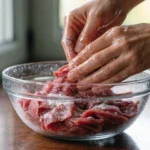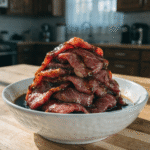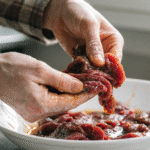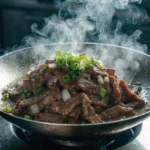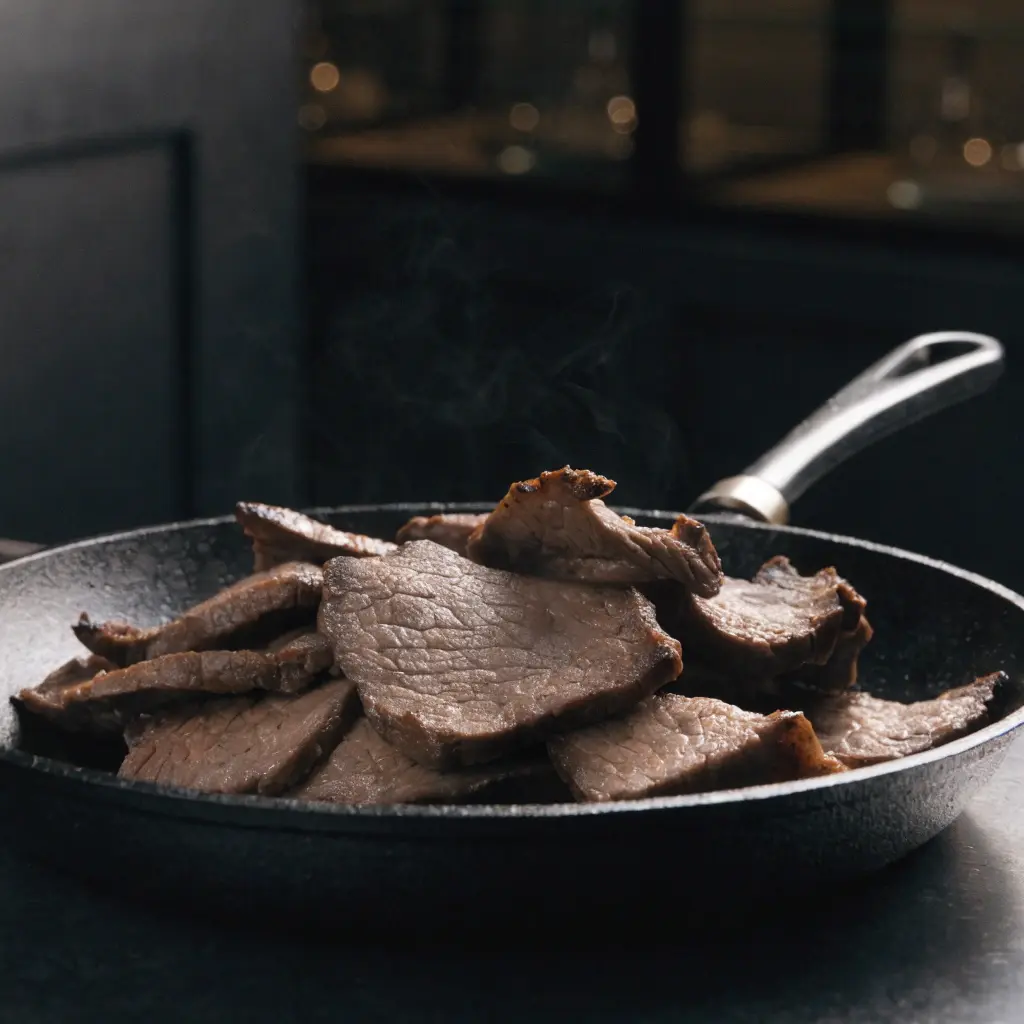
Thin sliced beef looks like one of the easiest proteins to cook. You toss it into a hot pan, stir it for a minute, and dinner is done.
But if you’ve ever tried it at home, you probably know the frustration: one small mistake and your beef turns chewy, rubbery, and dry almost like you’re biting into leather.
The good news is that tough thin beef is usually caused by a few common issues, and they’re easy to fix. And if tenderness is your main goal, you’ll also want to check this full guide on how to keep thin sliced beef tender.
Let’s break down why thin sliced beef gets tough and what you can do to prevent it.
Table of Contents
Why Thin Sliced Beef Becomes Tough So Fast
Thin sliced beef cooks extremely fast, which is why it’s so easy to ruin.
Thin beef cooks faster than you think
Because the slices are thin, heat reaches the center almost immediately. This means thin beef can go from raw to overcooked in under a minute.
If you treat thin beef like steak strips and leave it cooking for several minutes, the texture will almost always turn chewy.
High heat dries it out quickly
High heat is great for flavor because it creates browning through the Maillard reaction, but it also pulls moisture out of the meat.
Thin beef doesn’t have enough thickness to protect its juices, so moisture loss happens fast. Once the surface dries out, muscle fibers tighten, and the beef becomes tough.
Overcooking by 30 seconds ruins the texture
With thin sliced beef, timing matters more than anything. Even 30–60 seconds too long can completely change the texture.
That’s why restaurant-style beef stays tender: it’s cooked quickly and removed immediately. (You can learn more in this guide on how restaurants make thin sliced beef so tender.)
The 1 Mistake People Make With Thin Sliced Beef
The biggest reason thin beef gets tough is simple: overcooking.
Cooking it too long “just to make sure it’s done”
Many people keep cooking thin beef until every piece is fully brown and “safe.” But thin beef doesn’t need long cooking time.
Instead, it should be cooked fast, then removed while it still looks slightly juicy.
Leaving it in the pan after turning off the heat
This is another hidden mistake. Even after the heat is off, the pan stays hot and continues cooking the beef.
Cast iron and stainless steel pans are especially good at holding heat, so your beef can overcook while it’s just sitting there.
Other Common Reasons Thin Beef Turns Chewy
Overcooking is the main cause, but several other factors can also ruin tenderness.
Using the wrong cut (round, chuck)
Some cuts are naturally tough, especially round steak and chuck. When sliced thin, these cuts need extra help or they’ll cook up chewy.
Better cuts for thin slicing include ribeye, sirloin, and flank steak.
Cutting with the grain instead of against it
If you cut beef with the grain, you leave long muscle fibers intact. Once cooked, those fibers tighten and create a tough bite.
Cutting against the grain shortens the fibers, which makes thin beef much easier to chew.
Not resting after cooking
Thin beef doesn’t need a long rest, but letting it sit for 2–3 minutes can help it hold moisture.
If you serve it immediately, juices can escape quickly.
No marinade or tenderizing method
Thin beef doesn’t have time to soften during cooking, which is why a quick tenderizing step can make a huge difference.
If you want a reliable method, check this guide on how to tenderize thin sliced beef before cooking.
How to Fix Tough Thin Sliced Beef (Fast Solutions)
If your beef already turned tough, don’t throw it away. You can still save it.
Add sauce and simmer for 3–5 minutes
One of the easiest rescue tricks is to add moisture.
Pour in a sauce (soy sauce, broth, teriyaki, or gravy) and simmer gently for a few minutes. This rehydrates the beef and makes it easier to chew.
Slice it thinner and against the grain
If the beef is already cooked and tough, slicing it thinner can improve the texture.
Cut against the grain for the best results.
Re-purpose it into stir-fry or sandwiches
Tough beef works better in meals that include sauce or moisture.
Good “rescue” ideas include:
- beef stir fry with vegetables
- fried rice
- beef wraps with sauce
- sandwiches with melted cheese
How to Prevent Toughness Next Time
If you want tender thin beef every time, focus on these key rules.
Cook in batches (avoid steaming)
If you overcrowd the pan, beef releases moisture and starts steaming instead of searing.
Steaming is one of the fastest ways to create rubbery texture. Cook in small batches for better browning.
Use high heat but short cooking time
High heat is correct—but the cooking time must be short.
Thin beef should cook quickly, then come out of the pan immediately.
Use the velveting technique (cornstarch + optional egg white)
Many Asian restaurants use a technique called velveting, where beef is coated with cornstarch (sometimes with egg white and oil).
This creates a protective layer that locks in moisture and prevents the meat from drying out. If you want the full method, read this guide on whether you should use cornstarch on thin sliced beef.
Marinate for at least 20–30 minutes
Even a short marinade can dramatically improve tenderness.
If you need ideas, here are some of the best marinades for thin sliced beef.
Best Cooking Time Guide (Quick Reference)
Thin sliced beef cooks fast, so always watch the clock.
Stir fry: 30–90 seconds
Cook on high heat, then remove immediately.
Pan sear: 1–2 minutes per side (maximum)
This depends on thickness, but most thin beef should never exceed 2 minutes per side.
For a full breakdown of cooking methods, check this complete guide on how to cook thin sliced beef.
Hot pot: 10–20 seconds
Hot pot beef is designed to cook almost instantly. If you leave it too long, it becomes tough immediately.
Final Takeaway
Thin sliced beef gets tough because it cooks too quickly and loses moisture fast. The most common cause is overcooking—even by a few seconds.
To keep it tender:
- choose the right cut
- slice against the grain
- cook fast over high heat
- avoid overcrowding the pan
- use marinades or velveting methods
If you want the full step-by-step tenderness system, visit the main guide on how to keep thin sliced beef tender.
FAQ
Why is my thin sliced beef rubbery?
It’s usually overcooked or cooked in an overcrowded pan, which causes steaming instead of searing.
Can you overcook thin sliced beef?
Yes. Thin beef can overcook in less than 1 minute, especially in a hot pan or wok.
What cut of beef stays tender when sliced thin?
Ribeye, sirloin, and flank steak are among the best cuts for thin slicing.
How do restaurants keep beef tender?
Restaurants often use velveting (cornstarch coating), baking soda tenderizing, and high-heat quick cooking.