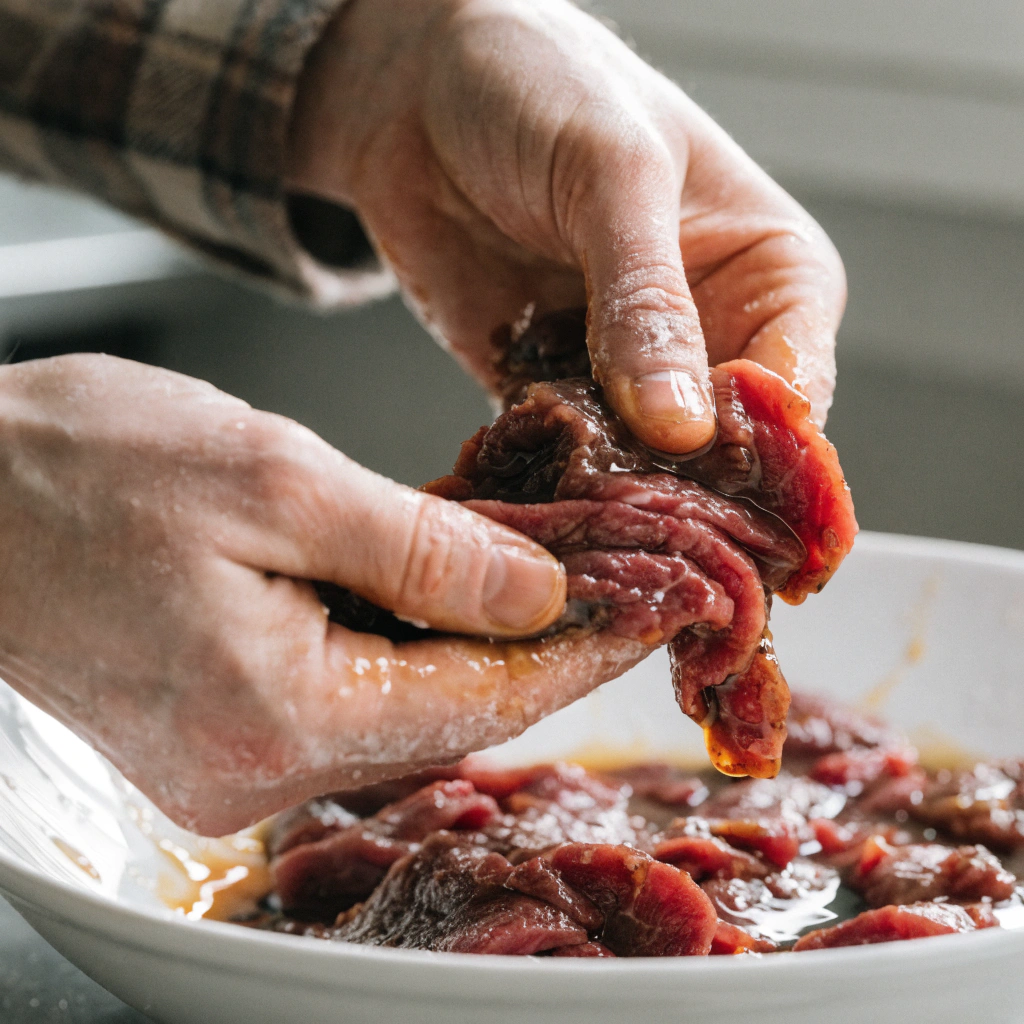
If you’ve ever wondered why restaurant stir-fry beef feels soft, silky, and tender—but your beef turns chewy at home, there’s a good chance you’re missing one simple ingredient:
cornstarch.
Many people think cornstarch is only used to thicken sauces. But in reality, cornstarch is one of the most effective ways to keep thin sliced beef tender, juicy, and restaurant-quality.
In this guide, you’ll learn exactly what cornstarch does to beef, how to use it properly, and when you should avoid it.
(For the full tenderness system, read this guide on how to keep thin sliced beef tender.)
Table of Contents
What Cornstarch Actually Does to Thin Sliced Beef
Cornstarch doesn’t “tenderize” beef the same way a marinade does, but it improves texture in a powerful way.
It creates a protective coating
When beef is coated in cornstarch, it forms a thin barrier on the surface. That coating prevents direct heat from drying out the meat too quickly.
It locks moisture inside
Thin sliced beef loses moisture fast. Cornstarch helps trap natural juices inside the meat, which keeps it soft.
It prevents toughness from overcooking
Even when beef is cooked quickly, the surface can tighten and become chewy. Cornstarch slows down that tightening effect, making the beef more forgiving.
If you struggle with beef turning rubbery, this is often the fix. (You can also read why thin sliced beef gets tough and how to fix it fast.)
What Is “Velveting Beef”?
Using cornstarch on beef is part of a technique called velveting, which is widely used in Chinese restaurants.
Velveting means coating the meat so it stays smooth and tender after cooking.
If you’ve ever ordered beef and broccoli or Mongolian beef and noticed how soft the beef is—that’s velveting.
For more restaurant methods, check how restaurants make thin sliced beef so tender.
How to Use Cornstarch on Thin Sliced Beef (Step-by-Step)
This is the easiest method for home cooking.
Best cornstarch ratio
Use this rule:
✅ 1 tablespoon cornstarch per 250–300g (½ lb) of beef
That’s enough to coat the beef without making it gummy.
Simple cornstarch coating method
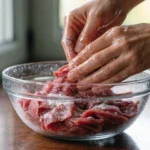
- Pat the beef dry with paper towels
- Place it in a bowl
- Add:
- 1 tbsp cornstarch
- 1 tbsp soy sauce (optional but recommended)
- 1 tsp oil
- Mix until evenly coated
- Let it rest for 10–20 minutes
- Cook quickly on high heat
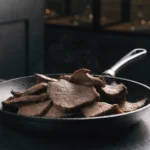
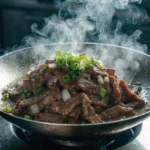
This method works perfectly for stir fry beef.
If you want to add an extra tenderness boost, combine it with a tenderizing step like baking soda. (See how to tenderize thin sliced beef before cooking.)
Optional Velveting Upgrade: Cornstarch + Egg White
Some restaurants use egg white for a smoother, silkier texture.
How to do it
Mix:
- 1 egg white
- 1 tbsp cornstarch
- 1 tbsp soy sauce
- 1 tsp oil
Coat the beef and let it sit for 15 minutes before cooking.
This is especially good for beef used in sauces because it stays tender longer.
Should You Cook Cornstarch-Coated Beef Differently?
Yes slightly.
Cornstarch-coated beef needs:
- high heat
- quick cooking
- batch cooking
If you cook it too slowly, the coating becomes sticky and the beef may steam instead of sear.
For full cooking methods, see the main guide: how to cook thin sliced beef.
When Cornstarch Works Best
Cornstarch is ideal for quick cooking recipes.
Best uses for cornstarch beef
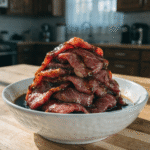
- stir fry beef and vegetables
- beef and broccoli
- Mongolian beef
- pepper steak
- garlic soy beef
- Korean-style beef bowls
- noodle stir fry
Cornstarch works especially well with thin slices because they cook fast and dry out easily.
When You Should NOT Use Cornstarch on Thin Sliced Beef
Cornstarch isn’t perfect for every cooking method.
Avoid cornstarch if you are:
- grilling beef strips
- cooking steak-style beef with a crust
- doing dry seasoning or spice rub recipes
- making beef for fajitas (unless you want a sauce-style texture)
Cornstarch gives a smoother texture, not a crispy steak crust.
Cornstarch vs Flour vs Potato Starch
If you don’t have cornstarch, you may be tempted to substitute something else.
Cornstarch
Best for velveting and smooth restaurant texture.
Flour
Works in a pinch, but can taste heavier and may turn pasty.
Potato starch
Very good alternative Boften gives an even crispier finish.
Tapioca starch
Can work but may feel sticky if overused.
Cornstarch is still the best option for classic stir fry tenderness.
Common Mistakes That Ruin Cornstarch Beef
Cornstarch helps a lot, but only if you use it correctly.
Using too much cornstarch
This makes beef gummy and thick-coated. Stick to the correct ratio.
Not using enough heat
Cornstarch-coated beef needs a hot pan. Low heat causes steaming, and steaming makes beef chewy.
Overcrowding the pan
If the pan is crowded, moisture builds up and the beef boils instead of sears.
Cook in batches.
Cooking too long
Even with cornstarch, thin beef can still overcook. It’s more forgiving, but not indestructible.
If you want a full system to avoid toughness, go back to how to keep thin sliced beef tender.
Best Marinades to Combine With Cornstarch
Cornstarch works even better when paired with the right marinade.
Great combo ingredients:
- soy sauce
- oyster sauce
- sesame oil
- garlic and ginger
- honey or brown sugar
If you need recipes, check best marinades for thin sliced beef.
Final Takeaway
So, should you use cornstarch on thin sliced beef?
✅ Yes especially for stir fry cooking.
Cornstarch creates a protective coating that helps thin beef stay juicy and tender, even on high heat. It’s one of the most common restaurant techniques and one of the easiest ways to upgrade your results at home.
If tenderness is your goal, combine cornstarch with:
- proper slicing against the grain
- quick cooking time
- batch cooking
- optional tenderizing (like baking soda)
For the full system, visit: How to Keep Thin Sliced Beef Tender (internal link to cluster).
FAQ
Does cornstarch actually tenderize beef?
Cornstarch doesn’t break down muscle fibers, but it protects the beef from drying out, which makes it feel much more tender.
Why is my cornstarch beef slimy?
You likely used too much cornstarch or didn’t cook it on high heat. Low heat causes the coating to turn sticky.
Can I use flour instead of cornstarch?
Yes, but flour creates a heavier texture and doesn’t velvet beef as well as cornstarch.
What starch do Chinese restaurants use on beef?
Most use cornstarch, sometimes combined with egg white for velveting.
Should I rinse off cornstarch before cooking?
No. Cornstarch is meant to stay on the beef and cook into a protective coating.